





































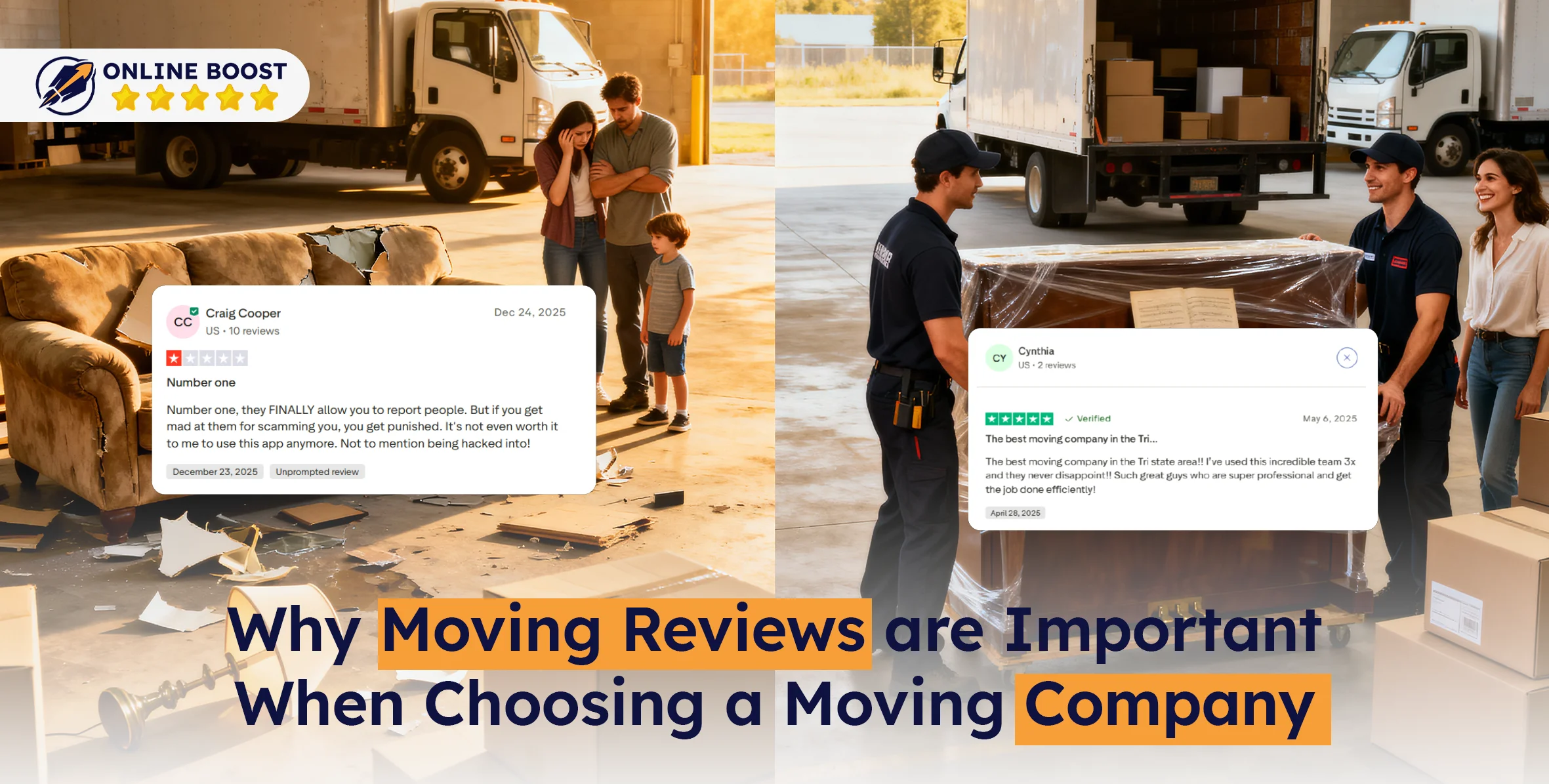
Most moving problems don’t start on moving day. They start with the wrong choice.
When you search for movers, what are you really worried about? It’s not the truck size or the tape. It’s the fear that something might go wrong, and you won’t find out until it’s too late. That uneasy feeling is exactly why moving reviews exist, and why they matter far more than flashy websites.
Here’s a fact most people don’t realize: moving services consistently rank among the top complaint-heavy local services, with thousands of reported issues every year. And yet, many people still pick movers based on price alone.
The people who don’t? They read moving company reviews first.
Anyone can promise “stress-free moving.” But reviews show you what actually happens behind the moving scenes. That’s why so many people now check moving reviews before hiring movers.
You might be wondering, are moving company reviews reliable? Fair question.
When you look at customer reviews the right way, they become one of the clearest signals of trust you’ll ever get.
What Moving Reviews Tell You That Company Websites Don’t
By the time you reach a company's website, you're already being shown its best version. That's fine, but it’s also incomplete.
Reviews exist because they show you the parts that never make it onto a homepage.
Day-Of Experience
When people leave real moving reviews, they usually describe what actually happened on moving day. These are the moments that define your experience, and they don’t show up in marketing copy.
Behavior When Problems Appear
Company websites avoid this topic entirely. Reviews don’t. In reviews, you’ll often see stories about damaged items, delayed deliveries, or pricing disputes, and more importantly, how the company responded. Those responses tell you far more than any “we care about our customers” statement ever could.
Pricing Reality After the Estimate
People frequently use reviews to talk about unexpected charges, hourly rate changes, or add-on fees that were never clearly explained upfront. When you read through the best moving companies reviews, you’ll see which companies stick to their estimates and which ones rely on confusion once your belongings are already loaded.
Consistency Across Multiple Customers
A company website shows one voice. Reviews show dozens, sometimes hundreds. When moving company ratings and reviews repeat the same strengths or complaints across time, locations, and move types, that consistency becomes hard to ignore.
Signals That Help You Compare Options Faster
When you’re comparing top-rated moving companies, reviews help you eliminate poor fits before you ever pick up the phone. They give you context and clarity, which makes it easier to choose a moving company.
Why Moving Reviews Matter the Most in Choosing a Reliable Moving Company
When people say reviews are “important,” they usually don’t explain why. Not in a way that actually helps you make a decision. So let’s discuss them now.
Reduce Risk in a High-Risk Industry
Moving isn’t like ordering food or buying clothes. It’s a high-risk service. Consumer protection reports consistently rank moving services among the top local industries for complaints, with thousands of cases every year. Once your belongings are on the truck, your leverage drops fast. That’s exactly why moving reviews matter so much.
Show Real Behavior
Anyone can sound trustworthy for 15 minutes on a phone call. Reviews exist after the sale. That’s why moving company reviews carry more weight than any quote or brochure. They reflect how crews behave when no one is watching and whether they take responsibility when mistakes happen.
Expose Pricing Patterns
Price issues are one of the most common reasons people regret their choice. A survey shows that a large share of moving complaints involve unexpected charges or estimate changes. Reviews give you early visibility into this. When dozens of customers describe similar billing problems, it’s a pattern.
Reveal Consistency Over Time
One good experience doesn’t make a company reliable. When you look through moving company ratings and reviews, you’re seeing trends over months or years. Consistency is what reliability actually looks like in practice.
Help You Make Faster Decisions
Here’s something many people don’t realize: reviews don’t just inform decisions, they simplify them. Most people compare several movers and feel overwhelmed. Reviews narrow that field quickly. They help you eliminate bad fits and highlight top-rated moving companies that align with your priorities.
Where to Find Reliable Moving Company Reviews
Now that you know why reviews matter, the next obvious question is: where do you actually find the ones worth trusting? Because not all platforms tell you the same story, and some are better at revealing patterns than others.
Google Business Profile Reviews
Google reviews are tied directly to a real business location, which makes them harder to manipulate at scale. You’ll usually see a mix of positive and negative feedback, recent activity, and responses from the company itself.
BBB Ratings and Complaint History
What makes BBB useful isn’t the star rating alone, but the complaint history. You can see how often issues are filed, what those issues are about, and whether they were resolved. If a mover has unresolved complaints or repeats the same mistake over and over, that’s valuable context you won’t get from marketing materials.
Yelp and Other Local Review Platforms
Customers often write longer stories here: what went wrong, what went right, and how the experience felt overall. While Yelp can sometimes skew negative, repeated complaints about the same issue shouldn’t be ignored. At the same time, consistent praise across different users can confirm service quality.
Moving-Specific Review Sites and Directories
Because everyone reviewing has used a mover, the feedback is usually more detailed and specific. These sites are especially useful when you want trusted moving company reviews that go beyond surface-level comments.
Here are some moving directory sites:
Social Media, Neighborhood Groups, and Forums
Local Facebook groups, Reddit threads, and neighborhood forums often reveal unfiltered experiences. People ask for recommendations, share warnings, and follow up after their moves. You’ll also see discussions about companies that don’t appear on major platforms at all.
How to Read Moving Reviews the Right Way

By this point, you know reviews matter, and you know where to find them. But here's the part most people get wrong: they don’t know how to read them properly.
They skim star ratings, glance at a few comments, and move on. That’s how people make bad decisions.
Start With the Written Experience
Instead of clicking the highest rating first, open the written reviews. A five-star review that says, “Great service!” tells you very little. A three- or four-star review that explains what went well and what didn’t often tells you much more.
Example: A mover with a 4.2 rating and detailed feedback about punctuality and pricing transparency is often a safer bet than a 4.9 rating filled with one-line praise.
Look for Patterns
One angry customer doesn’t define a company. As you scroll, pay attention to issues that appear again and again. When the same concern shows up across multiple reviews, that's not a coincidence. That's behavior.
Example: If ten people mention surprise fees after pickup, that’s a pricing pattern, not a misunderstanding.
Check Review Recency and Timeline
Old reviews lose relevance faster than most people think. A company that improved, or declined, will show that change in recent feedback. Focus more on reviews from the last 6–12 months.
Example: A mover with glowing reviews from 2019 but repeated complaints in 2024 deserves closer scrutiny.
Pay Attention to Detail and Specifics
Authentic feedback includes details, dates, crew behavior, timelines, and pricing context. Vague praise or repeated wording across reviews can be a red flag.
Example: “Crew arrived at 8:30 AM, finished early, and charged exactly what was quoted” carries more weight than “Amazing movers!”
Evaluate the Company’s Responses
Look at how companies respond to negative feedback. Calm explanations, accountability, and problem-solving efforts suggest maturity. Defensive or copy-paste replies suggest the opposite. This is one of the fastest ways to spot trusted moving company reviews.
Example: A company that acknowledges damage and explains the resolution process shows responsibility, even in a bad review.
Compare Reviews Across Multiple Platforms
Cross-check Google, BBB, Yelp, and community discussions. When feedback aligns across sources, it’s the reality. This step helps you identify real reviews and avoid skewed impressions.
Red Flags in Moving Company Reviews
By now, you’ve probably noticed that not all bad reviews look the same. Some are emotional. Some are fair. And some are clear warning signs you shouldn’t ignore. The key is knowing which ones actually matter.
Here are the red flags that deserve your full attention.
Repeated Complaints About Price Changes
One mention of higher costs might be a misunderstanding. Multiple mentions aren’t. If you see several reviews talking about estimates increasing after the truck arrived or charges added at delivery, that’s a serious warning.
Example: “Quoted $1,200, charged $2,100 after loading.”
Issues With Missing or Damaged Items
When customers repeatedly mention broken furniture, missing boxes, or careless handling, it suggests poor training or rushed crews. These details often show up clearly in customer reviews, even when websites promise “careful handling.”
Example: “Several items arrived damaged, and no one followed up.”
Lack of Communication or Sudden Silence
Reviews that mention unanswered calls, delayed updates, or being left in the dark, especially during delivery, should raise concern. Reliable companies don’t go silent when things get complicated.
Example: “Couldn’t reach anyone for days once my items were on the truck.”
Defensive or No Responses From the Company
If negative reviews are met with blame, excuses, or no response at all, that’s a red flag. When evaluating moving company ratings and reviews, the absence of accountability matters more than the complaint itself.
What “Good” Moving Reviews Typically Include
Not all positive reviews are useful. Some just sound nice. The ones that actually help you decide have a few clear traits in common.
Here’s what strong, reliable reviews usually include.
Clear Details About the Move
Good reviews explain what actually happened. They mention the move type, timing, crew size, and overall flow of the day. This level of detail is common in real moving company reviews and makes them far more credible than short praise with no context.
Example: “Two-bedroom local move, crew arrived on time, finished in under five hours.”
Honest Pricing Experiences
Good reviews explain whether the final cost matched the estimate and how pricing was handled. This is especially valuable when comparing reviews, because transparency shows up clearly in customer experiences.
Example: “Final bill matched the quote, no surprise charges.”
Balanced Praise
Many of the best reviews mention small issues alongside positives. This balance signals honesty and helps you trust the experience being shared.
Example: "Minor delay in the morning, but communication was clear, and the crew worked efficiently."
Specific Mentions of Crew Behavior
They describe professionalism, care for belongings, and communication. These human details show what working with the company actually feels like.
Example: “Crew wrapped furniture carefully and explained each step.”
Do Bad Reviews Always Mean the Company Is Unreliable?
Short answer? No. But ignoring bad reviews completely is just as risky.
Negative feedback needs context. The goal isn’t to find a company with zero complaints; it’s to understand what those complaints actually mean.
When a Negative Review Is a Real Warning
Some reviews shouldn’t be brushed off. If you notice repeated complaints about the same issue, that’s a pattern. When multiple moving reviews describe the same problem across different dates and platforms, it usually points to a structural issue within the company.
When a Negative Review Can Be an Outlier
Not every bad review means you should walk away. Moving is stressful, and even good companies can have off days. A single negative review surrounded by consistent, detailed positive feedback often says more about the situation than the service.
In these cases, look at how recent the review is, how specific it is, and whether the company responded constructively.
How to Compare Moving Companies Using Reviews
When you’re comparing movers, the goal is to read the right ones.
Comparing Reviews for Local vs Long-Distance Moves
| What to Check in Reviews | Local Moves | Long-Distance Moves |
|---|---|---|
|
Timing & Arrival |
On-time arrival and same-day completion |
Pickup accuracy and delivery window reliability |
|
Communication |
Crew coordination on moving day |
Updates during transit and delivery scheduling |
|
Handling of Items |
Speed and care during loading/unloading |
Protection during long transport |
|
Common Issues Mentioned |
Rushed work or delays |
Late deliveries or lost items |
How to use this: Focus only on reviews that match your move distance. A mover praised for local jobs may struggle with cross-country logistics.
Comparing Reviews by Service Type (Packing, Storage, Specialty Items)
| Service Type | What Good Reviews Mention | What to Watch Out For |
|---|---|---|
|
Packing |
Proper wrapping, labeling, and organization |
Broken items or rushed packing |
|
Storage |
Clean facilities and clear timelines |
Delayed access or unclear fees |
|
Specialty Items |
Careful handling and experience |
Damage or lack of proper equipment |
How to use this: If a service matters to you, only trust reviews that talk about that exact service, not general praise.
Comparing Companies With Similar Ratings
| What to Compare | Company A | Company B |
|---|---|---|
|
Review Detail |
Specific, descriptive experiences |
Short or generic praise |
|
Pricing Transparency |
Clear estimate and final bill match |
Frequent mentions of extra charges |
|
Issue Resolution |
Problems acknowledged and resolved |
Defensive or no responses |
|
Consistency Over Time |
Stable feedback across months |
Sudden rating spikes or drops |
How to use this: When ratings look similar, go into more depth and consistency, as it matters more than the number itself.
Common Mistakes People Make When Using Moving Reviews
Many people read them, yet still end up with a bad experience simply because they focus on the wrong signals. Here are the most common mistakes to avoid.
- Choosing Based on Rating Alone: Star averages hide details. Two companies can have the same score while delivering very different experiences. This is why relying only on ratings instead of reading reviews often leads to a bad experience.
- Ignoring Review Dates and Service Locations: A company that performed well years ago, or in a different region, may not operate the same way today. Always check how recent the feedback is and whether it matches your move type and area.
- Not Checking Multiple Review Sources: Each site attracts different types of feedback. When you only check one source, you risk seeing a skewed version of reality.
- Overlooking Repeated Complaints: If the same problem appears across multiple reviews, that’s a pattern worth paying attention to.
A Simple Checklist to Validate a Moving Company Using Reviews

Use this checklist to validate a moving company; open the reviews, go point by point, and check things off. If too many boxes stay unchecked, that’s your answer about the company.
- Recent reviews within the last 6–12 months
- Multiple detailed reviews, not just short praise
- Consistent pricing feedback
- Repeated mention of professional crew behavior
- Patterns of reliability, not perfection
- Clear handling of problems when they occur
- Company responses to negative feedback
- Feedback across multiple platforms
- No signs of artificial or suspicious praise
- Positive experiences that match your move type